Who's at Fault in a Ruskin Rear-End Car Accident?

Jim Curtis • January 8, 2026

Rear-end collisions are among the most common—and often most confusing—types of car accidents in Ruskin, Apollo Beach, Riverview, and across Tampa Bay. They can also be deadly. In the United States, there are around 3,000 deaths each year that are caused by rear-end collisions. If you’ve been involved in one, you probably have a basic question: Who’s legally at fault?


As a Florida personal injury lawyer serving Ruskin, Palmetto, Wimauma, Riverview, and surrounding communities, I’ve seen many accident victims make critical mistakes right after a crash that jeopardize their compensation. One of the first and most important steps to protecting your rights is understanding how Florida law assigns fault in rear-end crashes.


The Presumption: Rear-End Driver Is Usually at Fault


In Florida, there is a strong legal principle known as the “rebuttable presumption of negligence” for rear-end collisions.

Under this rule, if a vehicle strikes another from behind, the law initially presumes the rear driver was negligent. This presumption is based on the common-sense expectation that every driver has a duty to:


·      Keep a safe, reasonable following distance sufficient to stop safely;

·      Maintain proper lookout for changes in traffic;

·      Operate their vehicle in a manner that allows avoidance of collisions.


These duties reflect the statutory requirement under Fla. Stat. § 316.0895 that no driver may follow another “more closely than is reasonable and prudent, having due regard for the speed of such vehicles and the traffic upon, and the condition of, the highway.”

Because rear-end collisions imply a failure of that responsibility, the law gives a presumption of fault to the rear driver. For many accident victims in Ruskin or Riverview, this presumption is the foundation of their injury claim.


But the Presumption Is Rebuttable — Fault Is Not Automatic


It’s important to understand: the presumption of fault is not absolute. Florida law allows the rear driver to present evidence that shifts or shares fault when certain exceptions apply. Common scenarios that may overcome (or “burst”) the presumption include:


·      Sudden, unexpected stop by the lead (front) driver — for example, the lead vehicle brakes erratically in the middle of the road         for no clear reason.


·      Malfunctioning brake lights or turn signals on the front vehicle, giving the rear driver no reasonable way to anticipate the                 stop or slowdown.


·      Mechanical failure in the rear vehicle (e.g., brake failure), making safe stopping impossible.


·      Illegal stop or obstruction in the roadway by the front driver—such as stopping in traffic without hazard lights, or reversing               without warning.


If one of these exceptions applies—and is supported by evidence—then fault may be shared or even shifted entirely to the lead driver. Because Florida is a comparative fault state, multiple parties can share liability.


Even after the presumption is rebutted, a jury (or insurer) must decide the percentage of fault assigned to each driver, which directly affects how much compensation may be recovered.


What This Means for Ruskin & Tampa Bay Drivers


If you were rear-ended on a road near Ruskin, Apollo Beach, Riverview, or along US-41 or I-75 in Tampa Bay:


·      There’s a strong starting point in your favor—the rear-end presumption of negligence.


·      You must still gather and preserve evidence: police reports, photos, dash-cam footage, witness statements, evidence of faulty             brake lights, or signs that the lead car stopped suddenly.


·      Even if there is evidence against you, Florida’s comparative fault law may allow you to recover partial compensation—unless               your own fault exceeds 50%.


Recovering Damages After a Rear-End Crash


Even if you’re at fault for causing a rear-end collision, here’s some good news if you’re injured. In Florida, according to the Florida Department of Highway Safety and Motor Vehicles (FLHSMV), drivers are required to have a minimum of $10,000 in Personal Injury Protection (PIP) coverage, otherwise known as “No-Fault.”  Even if you’re at fault for a crash, you can still recover under Florida’s No-Fault law, which will pay up to 80% of your medical bills or 60% of your lost wages up to the required $10,000, regardless of fault.


What to Do Immediately After a Rear-End Crash


To protect your rights and give your case the best chance of success:


1.    Call the police and request a crash report.

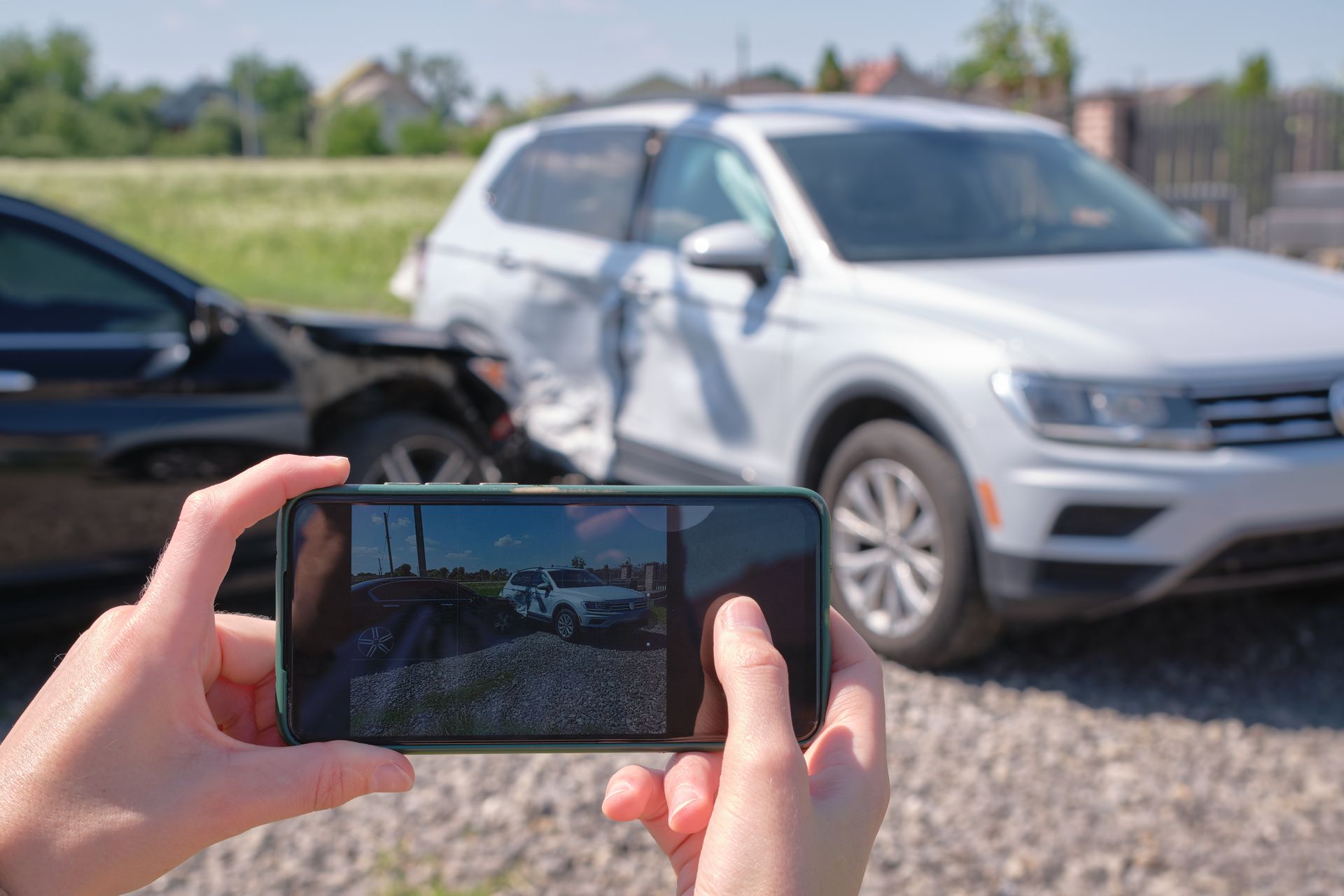
2.    Document the scene — take photos of both vehicles, their damage, brake lights, road conditions, traffic signals, skid marks, and surroundings.

3.    Gather contact info from witnesses and any bystanders.

4.    Seek medical evaluation as soon as possible—even if you feel fine.

5.    Preserve all evidence — avoid deleting photos, texts, dash-cam footage, or social media posts related to the crash.

6.    Talk to a qualified Florida rear-end collision attorney early — before providing statements to insurance beyond essential information.


Why Having a Local Florida Lawyer Matters


Every Florida rear-end crash case has unique facts—and local courts and insurance practices in Ruskin, Hillsborough, Manatee, and surrounding counties have often developed nuanced approaches to fault and claims.

At Jim The Lawyer, we:


·      Understand how Florida’s presumption of negligence applies—and how to challenge it when warranted


·      Know how to build a claim even when the presumption is rebutted, using evidence of mechanical failures, brake-light defects,           or improper stops


·      Handle complicated comparative fault issues to maximize your potential compensation


·      Represent clients across Ruskin, Apollo Beach, Riverview, Palmetto, Wimauma, and all of Tampa Bay


If you’ve been injured in a rear-end crash, don’t leave your future to chance. Let us help you navigate the legal process with experience and local insight.


Bottom Line: Yes — The Rear Driver Is Usually Faulted,

But Fault Is Never Guaranteed


In Florida, the law starts with a strong presumption against the rear driver. That means in most rear-end collisions, especially simple, clear-cut crashes, fault will be assigned to the driver who struck from behind. But because the presumption is rebuttable, the truth is often more complex. Brake failures, surprise stops, faulty tail lights, and shifting traffic can change the story—and the liability.


If you live or were injured in Ruskin, Apollo Beach, Riverview, Tampa, Wimauma, or Palmetto, and you’ve been rear-ended, you owe it to yourself to get a free, honest evaluation of your case.


Call us at (813) 937-9907 or visit calljimthelawyer.com today for a FREE consultation. Because when it comes to fault and Florida rear-end collisions, the right lawyer can make all the difference.


By Jim Curtis January 6, 2026
Learn what happens after you accept a personal injury settlement in Florida, including payment timelines, medical bills, liens, and how much you actually receive.
By Jim Curtis April 8, 2025
Do I Have to Call the Police After a Car Accident in Florida? There is nothing more inconvenient than being in a car accident. That’s why many people don’t even wait around to call the Police after one occurs. But is this legal? The answer depends on the circumstances of the crash, but understanding the legal requirements and practical implications can help you make an informed decision in an otherwise stressful situation. Florida’s Legal Requirements for Reporting Car Accidents Florida law requires you to file a police report if your crash meets any of the following criteria: · If there is any injury or fatalities · When there is property damage exceeding $500 · Hit-and-Run situations · If there is suspicion of impaired driving · The accident involved a commercial vehicle · A vehicle needs to be towed from the scene Failure to report your accident in such a case could potentially result in criminal penalties. However, although the law requires a report of the crash if any of these criteria are met, the law does allow drivers up to 10 days to file a crash report with local authorities if they did not call the police at the scene. This obviously would not apply in the case of injury or fatality, or if a driver is impaired. These should be reported immediately. Regardless of the situation, it is always best practice to call the Police after a car accident. Why You Should Call the Police Even When You’re Not Legally Required to Do So There are number of reasons why you should still call the Police after a car accident even if you don’t meet any of the criteria that would legally require you to do so. The reasons include: There is Less Chance for Conflicting Stories When information is gathered quickly at the scene of an accident by the Police, it can then be preserved and there is less chance that it can be misconstrued in the future. People also tend to be more forthcoming at the scene when talking to the Police. However, when given time to think about it, stories often change, especially if a person knows that a claim is being pursued against them. Calling the Police and getting a report can help prevent this happening. Document the Accident The Police Report is the best place to document your accident right after it happened. Unlike merely exchanging information with the other driver, having the Police obtain a statement from all parties involved as well from any eyewitnesses is crucial for any subsequent insurance claim. The Police will often also assign fault to a party, which can be useful in a subsequent claim as well. Document Your Physical Complaints The Police Report is your first opportunity to document any physical complaints that you may have, while still at the scene of the accident. This is very important, especially if you’re unable to seek medical treatment right away. In such a case, without a Police report documenting your complaints, the insurance company may question whether you were even hurt in the accident, especially if it took 4-5 days for you to get in to see a doctor. When You Might Choose Not to Call the Police Although it is always best to call the Police after a Florida car accident, there are times where it may not be imperative that you do so. One such situation would be in the case of a minor accident with no injuries. If the crash is minor and all vehicles are driveable, and nobody is complaining of any injury, waiting around for the Police to show up and take down your information may not be necessary – as long as you still take steps to properly document your accident. Those steps should include: · Exchanging Information: Take a photo of the other driver’s license and make sure to get insurance information. · Take Photographs: If you are not going to call the Police after your accident, it is even more important that you document the crash by photographs. Be sure to take photos of the scene of the accident, and of the damage to all of the vehicles involved in the crash. · Witness Statements: If there are witnesses to your accident, ask for their names and phone numbers so you can get a statement from them later, if necessary. From here, contact a lawyer if you have any questions about filing an insurance claim, or if you begin to feel pain and believe that you may have been injured. Challenges in Pursuing an Insurance Claim Without a Police An insurance company will question everything after an accident. This is especially true if there is no Police Report. Without a Police Report, there is a good chance that liability may be disputed, as there is likely to be conflicting stories from each driver. The Police will investigate the crash and determine who they believe caused the accident. This can help if there are conflicting versions of what happened. Another challenge is in proving that your injury is related to the accident, and not to something else. Without a Police report documenting your complaints, the insurance company may dispute your injuries and their relation to the crash. This is especially true if you don’t seek treatment right away. Call Florida Car Accident Attorney, Jim The Lawyer, for Legal Help Hiring an experienced car accident lawyer can make all the difference in the outcome of your Florida car accident case. If you’ve been injured in a Florida car accident, Jim The Lawyer is here to help you fight to get the maximum compensation you deserve for your injury.  Contact Jim The Lawyer, Accident and Injury Attorney, at (813)937-9907 for a FREE Consultation and Case Evaluation.
By Jim Curtis April 1, 2025
Riverview, Florida is one of the fastest growing areas in Hillsborough County. With this rapid population growth comes increased traffic congestion. This has made some areas of Riverview notorious for accidents. Below are some of the most dangerous roads and intersections in this region. Top Dangerous Roads and Intersections 1. U.S. 301 and Gibsonton Drive This is one of the most highly congested intersections in Southern Hillsborough County. Over a 15-month period, there were 95 reported crashes at this intersection. This is due not only to congestion, but also due to aggressive driving and frequent left-turn accidents. 2. U.S. 301 at Big Bend Road This is another very highly congested intersection during most times of day. The combination of speeding vehicles, failure to yield and poor visibility contributes to the danger of this intersection, which saw 86 accidents over a 15-month period. 3. Big Bend Road and Summerfield Boulevard Although this intersection is nestled in a residential community, it has accounted for 97 crashes within a 16-month period, with 14 serious injuries or fatalities. This intersection is dangerous due to its location which is known for speeding vehicles, and there is also very poor visibility for those making left-hand turns. 4. Big Bend Road and Summerfield Crossing Boulevard Located right down the street from Summerfield Boulevard is this equally dangerous intersection. Aggressive lane changes and insufficient signage are common issues contributing to the dangers present at this intersection. Over a 16-month period, there have been 92 crashes reported at this location. Common Causes of Car Accidents in Riverview, FL While many factors can cause a car accident, some of the most common causes of car accidents in Riverview, Florida include: · Failure to Yield : mostly occurring during the course of left-hand turns and due to drivers misjudging gaps in traffic; · Speeding: given the number of lanes of travel on roads such as U.S. 301, speeding has become a common occurrence in the Riverview, Florida area; · Poor Visibility: many intersections lack sufficient signage and become partially blocked to visibility due to overgrown landscaping; · Distracted Driving: texting and talking on mobile devices is problem on all roadways and is a significant contributor to accidents. Top 4 Things You Need to do After a Riverview, FL Car Accident Thankfully, car accidents are not a common occurrence for most people. However, when one occurs, it’s important to know what to do to best preserve your accident claim. Here are the top four things you should do after a Riverview, Florida car accident: 1. Prioritize Safety The first thing you should after an accident is to make sure that everyone in your vehicle is safe. If your vehicle is in a place of danger, move it to safety to avoid a secondary collision if possible. Then be sure turn on your hazard lights to ensure that your vehicle is visible to oncoming motorists. 2. Call 911 Calling the Police after a Riverview, Florida car accident is important for several reasons. First, the Police will document the crash and all parties involved, and conduct their investigation as to who is at fault for the crash. Second, the crash report that the Police will prepare documenting your crash will be your first opportunity to document any physical complaints you may have while you are still at the scene of the crash. This will be important for the insurance company to see and will help prevent any argument the insurance company may make that your injuries were not caused by the crash. 3. Take Photos Although the Police will be documenting the crash if you called them, it is still important for you, if possible, to take photographs of the damage. When taking photographs of the damage, don’t just take photos of your vehicle. Make sure to also take photos of all other vehicles involved in the crash. This is important because often times the other vehicle will have more damage to it than yours. In addition to taking photos of the damage to all vehicles, be sure to also take photos of the scene of the crash and the surrounding area. This will document everything as it existed at the time, and may also show nearby surveillance cameras that may have captured the crash as it occurred. 4. Seek Medical Attention as Soon as Possible The quicker you can seek medical attention after a crash, the better it will be for both yourself and any potential claim that you may have. By seeking immediate medical attention, you will not only be getting the treatment you need, but you will also be avoiding any argument related to a gap in treatment between the time of crash and your first date of treatment. Of course, in addition to doing these four things, you will also want to call a lawyer as soon as possible. A lawyer will conduct their own investigation of the crash and seek to preserve all relevant evidence for your claim before it is disposed of or destroyed. Call Jim The Lawyer After Your Riverview, FL Car Accident Hiring an experienced car accident lawyer can make all the difference in the outcome of your Riverview, Florida car accident case. If you’ve been injured in a Riverview, Florida car accident, Jim The Lawyer is here to help you fight to get the maximum compensation you deserve for your injury. Contact Jim The Lawyer, Accident and Injury Attorney, at (813)937-9907 for a FREE Consultation and Case Evaluation.
By Jim Curtis January 22, 2025
How Will My Medical Bills Get Paid After a Parrish, Florida Car Accident? The number one question that people have after a car accident is “who is going to pay my medical bills.” A lot of people think that since Florida is a “no-fault” state, that as long as they are not at fault for the accident the other driver’s insurance will automatically pay 100% of their bills. That is not the case. To understand how medical bills get paid after an accident, it is important to understand the various insurance coverages and how they work together to cover your medical costs after an accident. 1. Personal Injury Protection (PIP) Coverage After a car accident, the first layer of insurance that will be responsible for paying your medical bills is your Personal Injury Protection (PIP) Coverage. This is also commonly referred to as “no-fault” insurance. Every driver in the state of Florida is required to purchase PIP coverage, and it provides coverage for you regardless of who was at fault in the accident. So when you’ve been injured in an accident, regardless of who caused it, your PIP coverage will be the primary (or first) coverage that will be billed for your medical treatment. Here are some important points about PIP coverage in Florida: · The minimum amount of PIP coverage required by state law is $10,000; · To qualify for PIP – you must seek initial medical care within 14 days of your accident; and · PIP pays 80% of reasonable and necessary medical expenses and/or 60% of lost wages if you are prevented from working due to accident related injuries; So when you’ve been injured in an accident, your doctors will initially bill PIP under your own insurance policy before billing any other insurance (regardless of fault). With that said, PIP will only pay 80% of those bills, so the next question is “what happens with the 20% remaining?” 2. Medical Payments (MedPay) Coverage Medical Payments Coverage, or MedPay, is not required in Florida. However, if you’ve purchased MedPay it can be used to pay the remaining 20% of the medical bills PIP didn’t pay, or any bills over and above PIP to the extent of your MedPay limit of coverage. It can also pay your PIP deductible, if you have one. 3. Health Insurance Health insurance can also play an important role in paying your accident related medical bills. If you don’t have MedPay, your health insurance can be billed by your doctors to pay the remaining 20% that PIP doesn’t pay. It can also be used to pay your medical bills over and above PIP and MedPay when those coverages have been exhausted and you require additional medical treatment. However, if health insurance pays for any of your accident related medical treatment, your health insurer will have what is called a subrogation interest. Subrogation is the process by which your health insurance can seek reimbursement for any expenses it has paid for your accident related medical treatment if/when you recover from the at fault driver’s insurance company. This means that when your health insurance pays and you recover money from the at fault driver’s insurance, you will likely have to pay your health insurer back for any money it has paid for your treatment. Unfortunately, not everyone has health insurance, and not all doctors accept every health insurance provider. If you’ve exhausted your PIP and MedPay and you don’t have health insurance, don’t worry because you can still seek treatment for your accident related injuries. That’s because there are doctors that treat accident victims who, in the case of someone without health insurance (or if they don’t accept your health insurance), will defer receipt of payment until your case is over. This is called a Letter of Protection, whereby you and your attorney agree to protect the doctor’s interest and pay them when your case is over. 4. Bodily Injury (BI) Coverage Bodily injury coverage is insurance that may apply when you’ve been injured in an accident that wasn’t your fault (or you weren’t completely at fault). This is the at fault driver’s insurance that will cover you for medical expenses over and above what PIP has paid, lost wages, loss of future earning capacity, and/or pain and suffering damages. Unfortunately, Florida is the only state that does not require drivers to carry bodily injury coverage. Because it’s not required, and because of the rising costs of auto insurance, there are many drivers who choose not to have this coverage. In addition, because this coverage is not required, there are also many drivers who only purchase minimal bodily injury coverage. If there is no bodily injury coverage, or only minimal BI limits, there may not be much, if any, insurance proceeds for you to collect from the at fault driver. 5. Uninsured/Underinsured Motorist Coverage Uninsured/Underinsured Motorist Coverage (UM/UIM) is not mandatory in Florida but it is highly recommended that you buy it. This coverage protects you if you have been in an accident with an uninsured driver (a driver that does not have bodily injury coverage), or a driver that has only minimal bodily injury coverage limits. In such a case, you can file a UM/UIM claim with your own insurer who will then “stand in the shoes” of the at fault driver. You are then able to recover any of the damages you otherwise could have recovered from the at fault driver if they had bodily injury coverage (up to the limits of your UM/UIM coverage). Call Jim The Lawyer After Your Parrish, Florida Car Accident Navigating the complex world of insurance after a Parrish car accident can be a daunting challenge. That is why hiring an experienced car accident lawyer can make all the difference in the outcome of your Parrish car accident case. If you’ve been injured in a Parrish, Florida car accident, Jim The Lawyer is here to help you fight to get the maximum compensation you deserve for your injury. Contact Jim The Lawyer, Accident and Injury Attorney, at (813)937-9907 for a FREE Consultation and Case Evaluation.
By Jim Curtis January 13, 2025
Why do I Need Uninsured Motorist Coverage After a Ruskin, Florida Car Accident? Unfortunately, the cost of car insurance has skyrocketed, especially in the state of Florida. The effect of this is that many are now only purchasing the bare minimum of car insurance coverage. In Florida, the minimum coverage required by the state is Personal Injury Protection (PIP) and Property Damage coverage. That means that there are many drivers operating without bodily injury coverage. Bodily injury coverage is insurance that can be purchased and protects you by covering others for injury in the event you cause a crash. So if you’ve been injured in a car crash, the other driver’s bodily injury coverage will pay your economic and non-economic damages caused by the crash. The problem is, Florida is the only state in which there is no mandatory bodily injury coverage. This means many people are driving without it. In fact, nearly 20% of drivers are without insurance completely, and many more have only minimal coverage limits. Because of this, it is important that you have uninsured motorist coverage. What is Uninsured Motorist Coverage? Uninsured motorist coverage is insurance that protects you when you are involved in an accident with a driver that is uninsured, or a driver who has insufficient liability limits. In such a case, your uninsured (also known as underinsured) motorist coverage will step in and cover many of the areas of damage that you could have recovered from the at-fault driver had they had bodily injury coverage, or in the event of an underinsured driver, had they had sufficient limits to cover your damages. When you’ve been injured by an uninsured/underinsured driver, your uninsured/underinsured motorist coverage will cover damages caused by the crash, such as: · Past and future medical expenses · Past lost wages · Loss of future earning capacity; and · Past and future pain and suffering When Does Uninsured Motorist Coverage Apply? Uninsured motorist coverage applies when the following criteria have been met and the driver has been determined to be either uninsured – or if they are insured, there is insufficient coverage limits to fully compensate you for your injuries: 1. The accident must have arisen out of the inherent nature of the automobile, as such; 2. The accident must have arisen within the natural territorial limits of the automobile, and the actual use, loading, or unloading, must not have terminated; 3. The automobile must not merely contribute to cause the condition which produces the injury, but must, itself, produce the injury. Uninsured/underinsured motorist coverage has been found to apply in the following situations: · Get hit by a driver with no insurance or insufficient insurance coverage; · Hit and run accidents when you unable to identify the hit and run driver; · When you’ve been run off the road by another driver – no impact needed; · When you’ve been hit by a vehicle while riding your bicycle; · When you’ve been hit by a vehicle while a pedestrian; · In some cases, uninsured motorist coverage has been found to apply if you’ve been hit by an object thrown from a vehicle. · Accident involving a municipal or governmental vehicle. Given the high number of drivers who are driving without any insurance, or without bodily injury coverage, having uninsured motorist coverage is imperative coverage to have. As a personal injury attorney, I can say that there is nothing worse than having to tell a client who has been injured in a crash that there is no insurance to recover from the at-fault driver and, worse yet, the client didn’t spend the few extra dollars to buy uninsured motorist coverage. Call Jim The Lawyer After Your Ruskin, Florida Car Accident Hiring an experienced car accident lawyer can make all the difference in the outcome of your Ruskin car accident case. If you’ve been injured in a Ruskin, Florida car accident, Jim The Lawyer is here to help you fight to get the maximum compensation you deserve for your injury. Contact Jim The Lawyer, Accident and Injury Attorney, at (813)937-9907 for a FREE Consultation and Case Evaluation.
By Jim Curtis October 2, 2024
One of the biggest things people are initially concerned about after a car accident, even more so than any injury at first, is their car. People naturally feel helpless without the use of their car, and when its been damaged in an accident, there are a lot of unknowns. Questions like: Whose going to pay for the damage? What if the car is totaled? What about a rental car? How am I going to get work? These are all valid and logical questions, but for those who haven’t had to deal with insurance issues after an accident, these questions can be overwhelming, so it’s important to know what your options are depending on the different scenarios you may face. Here are several such scenarios, and the options available to you should you encounter one. Scenario #1 – You Caused the Accident If you cause an accident and your car is damaged or, worse yet, totaled, you better hope that you purchased collision coverage with your auto insurance policy. Collision coverage will cover you for any damage to your vehicle if it is involved in a collision with another object or vehicle, regardless of fault. So if the accident is your fault and your car’s damaged, your only option is to file a claim with your own insurance company under your collision coverage to get it fixed or replaced. The problem is, not everyone has collision coverage. This is because it is not a required coverage in the state of Florida, and it costs extra to add it to your policy. Given the high costs of car insurance, many people decide not to buy it. The bad news is if you don’t have collision coverage and you cause an accident, unfortunately you’ll have to come out of pocket for all of your own repairs costs, and there will be no insurance money to help. Scenario #2 - The Other Driver Caused the Accident When the other driver is at a fault for your accident, and if that driver has property damage coverage, which is required in Florida, then you can file a claim with the at-fault driver’s insurance and they will pay to have your car fixed up to the limit of that coverage which, in Florida, the law requires a minimum limit of $10,000 in property damage coverage If the repairs cost more than the driver’s limit of coverage - for example, your repairs are 12,000 and the driver only has the minimum $10,000 limit - or, if your car is a total loss and the value of your car exceeds the driver’s limit of coverage, you should then pursue your claim through your collision coverage, if you have it, as there is no limit to repair or replace your vehicle. The only downfall to using your collision coverage is that you will have to pay your deductible, if any, which will then be returned to you by your insurance company once they recover from the at-fault insurer. However, if you don’t have collision coverage, your only other option would be to go after the other driver personally for any amount over and above the policy limit and, in most cases, that’s probably not worth your time. Now it’s important to know that once the at-fault driver’s insurance accepts liability for the accident, then it’s at this point that they will also provide you with a rental car – if your car is a total loss - which you can use until the insurance company provides you with a valuation of your loss and agrees to pay your claim. However, if your car is not a total loss, a rental will only be provided for the time period that your car is being repaired. Sometimes though, it can take a few days, depending on the type of accident, for the insurance company to make a liability decision, so you may be without a vehicle during that time. If you have rental car coverage on your own policy and you’re in dire need of a car, then going your insurance for the rental car will be a whole lot faster. Scenario #3 - The Other Driver Caused the Accident and There are Other Vehicles that were Also Damaged in the Crash In this situation, when there are multiple vehicles that have been damaged, if the at-fault driver doesn’t have property damage coverage, then everyone is out luck unless everyone had their own collision coverage. However, if there is property damage coverage, the at-fault’s driver’s policy will need to be disbursed to each of the parties involved, and this will be done on a pro rata basis. Here’s an example. Let’s assume that there were three cars involved that were damaged in the crash, one being yours. Let’s also assume that the estimates for the damage to each car combined totals $24,000. Now if the at fault driver only has the minimum $10,000 limit in property damage coverage, the policy will be divided like this: You take your repair cost and divide by the combined total for each of the three cars, that will give you your percentage rate which you then multiple by the $10,000 policy limit, and then that will give you your pro rata share of the policy. You then do that for each of the 3 damaged vehicles and that is how the $10,000 policy will be divided amongst the 3. Car A $14,454/24,000= .060225 x $10,000 + $6,022.50 Car B $7,078./24,000=.029494 x 10,000 = $2,949.40 Car C $2,467.50/$24,000 = 0.10281 = $1,028.10 To sum it all up, it cannot be stressed enough just how important it is to have collision coverage given the number of uninsured drivers on the road and the minimum state requirements for property damage coverage. Although nobody has a crystal ball and can tell you if or when you might be in an accident and need it, you can protect yourself and your investment by simply spending the extra few dollars a month that it costs and, more importantly, you’ll have that peace of mind knowing that you’re covered regardless of the situation. Call Jim The Lawyer After Your Apollo Beach Car Accident Hiring an experienced car accident lawyer can make all the difference in the outcome of your Apollo Beach car accident case. If you’ve been injured in a Apollo Beach, Florida car accident, Jim The Lawyer is here to help you fight to get the maximum compensation you deserve for your injury. Contact Jim The Lawyer at (813)937-9907 for a FREE Consultation and Case Evaluation .
By Jim Curtis October 1, 2024
Driving is probably the most dangerous activity we do and for most of us, we do it every single day, and the statistics relating to driving and accidents are out of this world. According to the National Highway Traffic Safety Administration, one out of every three drivers will be involved in an injury accident during their lifetime. Worse yet, as a motorist, you can expect to be involved in an accident once every 10 years. For Florida drivers, the numbers don’t get any better. In fact, the state of Florida ranks third for total number of car accidents, behind only California and Texas. So, it’s safe to say that if you live in the state of Florida, the chances of you getting into a car accident are pretty high. The unfortunate truth is that when you’re in a car accident, your vehicle is going to get damaged and, if you’re one of the unlucky one out of three drivers that suffers an injury, you’re going to incur medical bills and other losses. The question is – who is going to pay for all of this? Well, that’s what insurance is for, if you’re lucky, because there are a lot of drivers out there that don’t have insurance. In fact, Florida currently ranks first in the nation for having the highest percentage of uninsured drivers – sitting at 26.7%. That’s more than one out of four drivers on the road that are uninsured - meaning those drivers have no insurance, whatsoever. It’s like playing Russian roulette. And here’s one more awful fact, Florida is also the only state in the country that doesn’t require drivers to carry bodily injury insurance coverage, which is insurance that protects you in the event the other driver caused the accident and you were injured. So although almost 27% of Florida drivers are totally uninsured, that percentage is a lot higher when factoring in the drivers who don’t carry bodily injury insurance coverage. As injury attorneys, there is nothing worse than having to tell a client that there is no insurance on the part of the other driver that will compensate them for their losses. What’s even worse is when the client doesn’t have the proper insurance to make up for this. For example, a recent client was involved in a rear-end accident that totaled his car. The accident clearly wasn’t his fault, because he was rear-ended. As a result of this crash, he lost his car and, to make matters worse, he also injured his neck pretty good, and he is now treating with a doctor for that injury. Come to find out that the other driver did not have insurance because their policy expired several weeks before the accident. That means that there is no property damage coverage to cover the loss of his car, and there is no bodily injury coverage to cover him for his injuries. To make matters even worse, although he had his own insurance, he unfortunately didn’t have the insurance coverage he needed to make up for what the other driver didn’t have. So, aside from his PIP coverage that will only pay a portion of his initial medical bills, he was out of luck with no insurance to recover from for his injury, or for his car. How can you prevent this from happening to you? Well, for starters, don’t look to your car insurance as a place to save costs when doing your monthly budget, as car insurance is nothing to skimp on. In fact, what we recommend is to actually spend a little more on your insurance. In Florida, the law requires you to maintain a minimum amount of insurance coverage, and I’m sure that’s true in every state. Here in Florida, you’re required to carry property damage coverage, that will protect the other driver for their vehicle damage in the event you were to cause a crash, and you’re required to carry PIP coverage. PIP is short for Personal Injury Protection and is otherwise known as no-fault insurance. PIP covers you for some of your initial medical bills or lost wages, regardless of fault for the accident – hence the name no-fault. But it won’t cover you for everything. So to make sure that you can make up for the insurance that the other driver doesn’t have, you need to purchase these two things: 1. You Need Collision Coverage Collision coverage will pay for the damage to your car regardless of fault. So if the other driver doesn’t have property damage insurance, you can still get your car fixed with minimal out of pocket expense as long as you have collision coverage. So unlike my client who chose not to have collision coverage, was hit by the uninsured driver and now can’t get a new car, if you buy collision coverage you’ll have peace of mind that this won’t happen to you. Collision coverage will also cover your car in the event you hit a tree, or telephone pole, or have any other sort of accident that doesn’t involve another car. 2. You Need Uninsured Motorist Coverage Uninsured motorist coverage is so, so important, especially here in Florida. If you buy it, it will cover you for your injuries over and above PIP in the event you were injured due to the fault of an uninsured motorist . So if you’re one of the unlucky ones and are hit by one of the 26.7% of uninsured drivers on the road, or you’re hit by a driver who is insured but didn’t buy bodily injury insurance coverage, you can then turn to your own insurance company to make up for it, subject to your limits of course. It will also apply to compensate you for injuries in the event you are injured by someone who is underinsured, meaning they didn’t carry a high enough limit of bodily injury insurance to compensate you for your injury. And it will apply to you and your family members. Call Jim the Lawyer After Your Florida Car Accident When you’re in a Florida car accident, it is not only important to have the right insurance coverage, it’s also important that you hire the right attorney to handle your Florida car accident claim. Hiring an experienced car accident lawyer can make all the difference in the outcome of your Florida car accident case. If you’ve been injured in a Florida car accident, Jim The Lawyer is here to help you fight to get the maximum compensation you deserve for your injury. Contact Jim The Lawyer at (813)937-9907 for a FREE Consultation and Case Evaluation.
By Jim Curtis September 25, 2024
When you’ve been injured in an accident, you can bet that the insurance company is going to analyze everything that you do from the time of your accident forward, and there are certain things that they’re going to look for, that they will rely on, and that will give them an argument as to why they shouldn’t pay you at all, or why they should pay you less for your claim. The truth is that insurance companies are smart, and unlike most people who aren’t in the insurance or legal industry, the insurance company understands that after an accident, your medical records will tell a story. Insurance companies also know that most people (Jurors) will believe this story, because if it is in your medical records, then it must be right. The problem is that people who’ve been injured in an accident are not thinking about the story that their medical records are telling. Instead, they’re just going about their daily lives, dealing with all of their normal daily responsibilities, while at the same time also trying to recover from their injury. It’s a lot to juggle, and the insurance companies use this to their advantage because, for most, when it comes to dealing with their life versus treating for, let’s say a neck or back injury, many will choose dealing with their responsibilities because life doesn’t stop just because your injured. Insurance companies take advantage of this fact, and they use it against you by painting a picture that your actions aren’t consistent with someone whose been seriously hurt. But if you do these three things, you can effectively take away these arguments. 1. Go to the Doctor as Soon as Possible After Your Accident This may sound like a no brainer but there are a lot of people who put off going to the doctor for sometimes days and even weeks after an accident. They do this in hopes that their injury will get better on its own, or just because they don’t like going to doctors. The problem is that any delay in seeking treatment, especially if significant (ex., greater than 7-10 days), will give the insurance company an argument to justify a lowball offer. The argument is that they don’t believe you could have actually been injured in the accident because, according to the insurance company (and many people believe this as well), if you were, in fact, injured in the accident, you would’ve seen a doctor sooner. You can avoid this type of argument by just going to the doctor right after your accident. Even if it’s just an urgent care visit or going to a chiropractor. The point is that you just need to document your complaints early and as close to the date of the accident as possible. 2. Be Consistent with Your Medical Treatment When looking at the medical records of someone who has been injured in an accident, one of the most concerning things to see is sporadic treatment. An example of this is when a person will treat consistently for a month or two, and then they stop treating at all for the next 2 or 3 months, or maybe even longer, and then they go back to treatment. The problem with this type of sporadic treatment is that it creates what insurance companies call a gap in treatment. A gap in treatment is a period of time in which there is no medical treatment, whatsoever, for your injuries. This can be the period of time from the date of your accident until your first date of treatment, as discussed above, or a period of time between two treating appointments, with no medical explanation. Insurance companies love gaps in treatment and they’ll use any gap in treatment to argue that you either weren’t hurt in your accident, or that your injury resolved and any treatment after the gap is not related to the accident. But if you consistently treat for your injuries, even if it’s just a regular maintenance appointment, the insurance company will take note of this and they won’t be able to make this argument. 3. Follow Your Doctors Recommendations The absolute worst thing you can do for your injury case is to not follow your doctor’s recommendations. Aside from some exceptional circumstances, like caring for a sick family member, there is really no good explanation for not following your doctor’s recommendations. A good example of this is when therapy (ex., physical therapy or chiropractic) has been recommended and the injured person either doesn’t go at all, or doesn’t go at the recommended rate. Or, worse yet, when therapy hasn’t fully resolved a person’s pain and the doctor recommends a pain management procedure – like an epidural steroid injection - and the person refuses this treatment. While it is understandable for someone to not want to have an injection, because nobody likes injections, the problem is that when you’re asking someone to pay you for your medical treatment and even more for your pain and suffering, you have to bet that the person or insurance company is going to look at the fact that you refused to do something that could have helped you, and they’re going to think that maybe your just not as injured as you claim. Bottom line, if you want to increase the value of your personal injury case, you have to have early and consistent medical treatment, and you have to be compliant with what your doctors tell you. Anything short of this, you’re just helping the insurance company. More importantly, you’re costing yourself valuable dollars in recovery. Call Jim The Lawyer, Accident and Injury Attorney, After Your Apollo Beach Car Accident Hiring an experienced car accident lawyer can make all the difference in the outcome of your Apollo Beach car accident case. If you’ve been injured in a Apollo Beach, Florida car accident, Jim The Lawyer is here to help you fight to get the maximum compensation you deserve for your injury. Contact Jim The Lawyer, Accident and Injury Attorney, at (813)937-9907 for a FREE Consultation and Case Evaluation .
By Jim Curtis September 20, 2024
As we age, most of us will suffer some degree of degeneration. It’s called the aging process. Some people can have pretty severe degenerative conditions and be completely asymptomatic, and never know it, for their entire life. Whereas others may be symptomatic and suffer daily from this condition. For those who are asymptomatic – meaning that they have no symptoms of any problem - a single traumatic event can make that otherwise asymptomatic condition become symptomatic. And for those who have symptoms, any traumatic event, like a car crash, can aggravate their condition and makes it worse. In either case, the underlying degenerative condition would be considered a pre-existing condition to the traumatic event. The issue of pre-existing conditions and injuries comes up a lot in injury cases and, despite what many people think, the fact that you may have a pre-existing condition does not bar you from pursuing a personal injury claim. With that said, it can pose some challenges. This is because insurance companies love to point at any pre-existing condition and use it as a defense to claim that it is the pre-existing condition that is the cause of all your problems, and not whatever accident you were involved in. But what can you really do about it? Well, if you’ve been involved in a traumatic event – like a car crash - you can’t do anything about the fact that you have a pre-existing condition, but you can take some steps to make sure that it’s clear and known that your pre-existing condition either became symptomatic due to your accident, or that your condition was aggravated as a result of it. Here are three steps you can take to ensure that your records are properly documented when it comes to your pre-existing condition and the effect your trauma had on it. 1. Report your Accident Immediately Making a report of your accident at the time it occurs is extremely important. Whether it’s calling the police after a crash or reporting a slip and fall to store management, this is your first opportunity to document the event and, more importantly, any corresponding symptoms that you may have. This is also the first place the insurance company is going to look to see if you made any complaints of pain. If you report pain immediately after an accident, it makes it much easier to point to that accident as the cause of your pain rather than having it be due to some preexisting condition. To the contrary, if you don’t report it or, worse yet, you report the accident but don’t report your complaints, the insurance company is going to think that you were fine at the scene, and it will make it easier for them to say that any later problems aren’t related. 2. Go to Your Doctor Immediately After Your Accident Probably the most important thing you can do if you have a pre-existing condition and then aggravate it in an accident is to go to the doctor as quickly as possible after your accident. This is true even if your condition was asymptomatic. The longer you wait to go a doctor after your accident the more that there will be what insurance companies call a gap in treatment. And in this scenario, the gap would be the period of time between the date of the accident and the first date of treatment. The longer this period of time, the more the insurance company will argue that the accident didn’t cause your problems. This is especially true if you had prior treatment for a pre-existing condition. But if you go to the doctor right after the accident, then you’ve at least documented the event in your medical records contemporaneously with your complaints. This makes it harder to argue that the accident had nothing to do with your problems. 3. Tell Your Doctor How Your Symptoms are Different This obviously only applies to someone who has had prior treatment for a condition, and not someone who was asymptomatic before an accident. If you’ve had prior treatment for your condition, telling your doctor how your symptoms are different or worse (actually describing the difference) is very important so that your doctor is able to note any differences in your records. The closer this is documented to the time of the accident, ideally on the same day, the better off you are. Then it is all about consistency from that point on. When it comes to pre-existing conditions, it’s all about documenting your complaints early and, if you do have a prior condition that you know about, it’s about making sure that the doctors know how your symptoms are different from before. Call Jim The Lawyer, Accident and Injury Attorney, After Your Riverview, Florida Car Accident Hiring an experienced car accident lawyer can make all the difference in the outcome of your Riverview car accident case. If you’ve been injured in a Riverview, Florida car accident, Jim The Lawyer is here to help you fight to get the maximum compensation you deserve for your injury. If you’ve been injured as a result of someone else’s negligence, contact Jim The Lawyer, Accident and Injury Attorney, at (813)937-9907 for a FREE Consultation and Case Evaluation.
By Jim Curtis September 17, 2024
Chances are you’ve all heard, whether it be somebody telling you to do this, or maybe you saw some lawyer advertisement discussing it, that it’s important that you take photos of the damage to your car after an accident. And that’s 100% true. But what a lot of lawyers don’t tell you in those ads is that more often than not, there are other things that you should’ve taken photographs of, besides the damage to your own car, that can be just as valuable for your case. So what photos should you take after a crash? 1. Take Photos of the Damage to Your Car Photos showing the damage to your car are extremely important, and they can be used in a number of different ways in your case. First off, photos of the damage to your car will show the severity of the impact to your car. This is not to suggest that there is any correlation between the amount of property damage and the severity of an injury, because most medical professionals will tell you that there is no correlation, and many people who’ve been injured in a low impact collision have still suffered serious, and permanent lifelong injuries. In fact, statistics actually show that most neck injuries occur when the vehicles are traveling at 12 mph or less, and most chronic neck pain cases are due to low impact vehicle crashes. With that said, insurance companies believe – or at least they like to argue this in a lot of cases –that there is a direct correlation between property damage and the extent of injury. So if you have significant damage to your car, photographs of that damage will go a long way with the insurance company in trying to resolve your injury claim. Without them, you would just be relying on an estimate of the damage, which even if high, doesn’t pack the same sort of punch as a photo. Secondly, photographs of the damage to your car will show where the initial impact to your car took place, which can be very important. For example, if your accident took place in an intersection and the photos show the damage to your car near the rear of your vehicle, that would suggest that you were already established in the intersection when you were hit. This can especially be important in a comparative fault case where there is a dispute as to who may have run a stop sign or who may have had a green or red light. Lastly, photos of your car’s damage are also very important in cases where it becomes necessary to hire experts like an accident reconstructionist or a biomechanical engineer. These experts will use these types of photos to reconstruct how the accident happened, or in the case of a biomechanical engineer, to explain how the force of the impact and the location of impact on your vehicle caused or contributed to your specific injuries. 2. Photos of the Damage to the Other Car These photos are commonly overlooked but are often times the most important photographs to take, especially in the case of a low impact collision. Insurance companies love low impact collisions because your car will, more likely than not, have suffered little to no visible property damage. The insurance company will use the photographs of your car showing the very minor damage to support paying you very little money by claiming that there was no way you could have been hurt in such a minor accident. They make this argument all the time. However, what often happens is that the other car – the one that hit you, more often than not will have more damage to it than yours. So to counter the insurance company’s argument, being able to show the insurance company photos of the damage to the other car can be beneficial to your claim. But if you didn’t take any photos of the other car, you’ll have nothing to show the insurance company to prove them wrong – and good luckk getting a copy of their photographs, because they’re never just going to hand them over to you. Photos of the other vehicles involved in the crash are also important in conducting any accident reconstruction or analysis of the biomechanical aspects of the crash – in other words, the forces involved, body movements, things of that nature to help prove causation of your injury. 3. Photos of the Roadway in the Area of the Crash Now anybody can go back after a crash and look at the area where the crash occurred. But unless they get out there on the same day as the crash, they’re not going to see exactly what the conditions were like at the time the crash occurred. Taking photos of the roadway after a crash will show, for example, whether the road was wet and, if so, how wet was it? Was it just wet, or was there standing water? These photos are also important because they will show whether there were any conditions or hazards that may have contributed to the crash, like in the case of standing water, there could be an ongoing drainage problem with the road, or maybe there is a large pothole or other deterioration of the roadway. If conditions like those exist, and if you can show that they somehow caused or contributed to the crash, then you may have identified another party who could be held responsible for the accident, and ultimately for your injuries. 4. Photos of the Surrounding Area Again, anybody can go back after a crash and look at the scene and surrounding area. But in reality, most people don’t get out there right away and, conditions do change – so it’s best to document them right away. Photos of the surrounding area can be extremely important. And by surrounding area, that means taking photos of any landscaping, any construction taking place, and of any signage in the area. Photos like these can sometimes help to identify other responsible parties. For example, if your accident took place at a corner intersection, maybe there were overgrown bushes or other shrubbery that impeded your vision, or the vision of the other driver. When taking photos of the surrounding area, it’s also important that you photograph all the buildings in the vicinity as well. In today’s day and age, many buildings have surveillance cameras on them and you can often get lucky and find one that captured your crash as it occurred. This can be gold if there is any dispute as to how the crash happened. So to sum this all up, if you’re in a car accident, the more photographs you can take of everything around you, the better off you’ll be when pursuing a claim for your injuries. Call Jim The Lawyer, Accident and Injury Attorney, After Your Apollo Beach, Florida Car Accident Hiring an experienced car accident lawyer can make all the difference in the outcome of your Apollo Beach car accident case. If you’ve been injured in an Apollo Beach, Florida car accident, Jim The Lawyer is here to help you fight to get the maximum compensation you deserve for your injury. If you’ve been injured as a result of someone else’s negligence, contact Jim The Lawyer, Accident and Injury Attorney, at (813)937-9907 for a FREE Consultation and Case Evaluation.